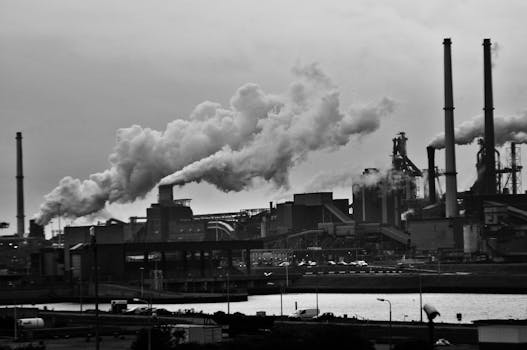

Imagine a scenario where a critical manufacturing process hinges on the precise control of extreme temperatures, or where a complex chemical reaction demands unparalleled material resilience. In such demanding environments, the specialized solutions offered by morgan industrial technology often become the unsung heroes, quietly underpinning operational success. This isn’t just about off-the-shelf components; it’s about deeply engineered systems and materials designed to withstand conditions that would cripple conventional equipment. For those of us deeply entrenched in industrial operations, understanding the foundational principles and evolving capabilities of Morgan’s offerings isn’t merely beneficial – it’s often essential for pushing the boundaries of efficiency, safety, and innovation.
The Genesis and Evolution of Engineered Material Solutions
The journey of morgan industrial technology is intrinsically linked to the relentless pursuit of advanced material science. It didn’t emerge overnight; rather, it’s a testament to decades of research, development, and practical application across a spectrum of demanding industries. Initially, the focus might have been on simpler refractory materials designed to contain heat. However, as industrial processes grew more sophisticated and the stakes for operational integrity higher, the demands on materials escalated dramatically.
Consider the early days of metallurgy or high-temperature ceramics. The challenges were fundamental: how to prevent equipment degradation, ensure process consistency, and most importantly, safeguard personnel. Morgan’s early innovations likely involved mastering techniques for creating robust linings, insulation, and structural components capable of enduring corrosive environments, abrasive wear, and extreme thermal cycling. This foundational expertise in material science and engineering is what laid the groundwork for the diverse portfolio we see today.
Key Pillars of Morgan’s Technological Prowess
When we talk about morgan industrial technology, we’re referring to a multifaceted suite of solutions rather than a single product line. This breadth allows for tailored approaches to incredibly specific industrial challenges. Let’s break down some of the core areas where their expertise truly shines:
#### Advanced Refractory Systems: The Backbone of High-Temperature Operations
At its heart, much of Morgan’s legacy is built upon its mastery of refractory materials. These aren’t your average bricks and mortar; we’re talking about sophisticated ceramic and composite materials engineered to withstand temperatures often exceeding 1500°C (2732°F) and beyond.
Monolithic Refractories: These are castable or ramming mixes that, when applied, form a seamless, monolithic structure. This eliminates joints, a common failure point in traditional brick linings, thereby enhancing thermal efficiency and structural integrity in furnaces, kilns, and incinerators. I’ve seen firsthand how a well-designed monolithic lining can dramatically extend the service life of a critical piece of equipment, reducing downtime and maintenance costs significantly.
Pre-formed Shapes and Bricks: For specific applications or ease of installation, custom-engineered refractory bricks and shapes remain indispensable. These are precision-manufactured to meet exact dimensional requirements and material specifications for various thermal and chemical stresses.
Insulation Materials: Beyond containment, effective insulation is paramount for energy conservation and process control. Morgan offers a range of high-performance insulation products, from blankets and boards to specialized fiber materials, designed to minimize heat loss and maintain precise operating temperatures. This is crucial for energy-intensive industries like steelmaking and glass manufacturing.
#### High-Performance Ceramics: Precision in Extreme Environments
The application of advanced ceramics extends far beyond simple heat resistance. Morgan’s expertise in this domain encompasses materials with remarkable properties like exceptional hardness, chemical inertness, and wear resistance.
Technical Ceramics: These are engineered for specific functionalities. Think of components for pumps and valves handling corrosive chemicals, seals that must perform reliably under immense pressure and temperature, or wear parts in material handling systems exposed to abrasive slurries. The precision manufacturing required for these components is a testament to their advanced capabilities.
Kiln Furniture and Furnace Components: Within the ceramics industry itself, Morgan provides kiln furniture – shelves, setters, and supports – that must withstand extreme firing temperatures without deforming or reacting with the products being fired. This ensures consistency and quality in the production of everything from tiles to advanced electronic components.
#### Specialty Materials for Unique Industrial Demands
Beyond refractories and broad ceramic applications, Morgan also pioneers solutions for highly specialized industrial niches.
Thermal Management Solutions: This can include advanced heat shields for aerospace applications, thermal interface materials for electronics, or specialized coatings designed to manage heat flow in complex machinery.
Corrosion-Resistant Linings: For industries dealing with aggressive acids, alkalis, or other harsh chemicals, the development of linings that offer robust protection without degrading is vital. This is where materials science meets practical engineering to prevent costly equipment failure and environmental hazards.
Navigating the Future: Innovation and Sustainability
The landscape of industrial technology is constantly evolving, driven by both market demands and a growing imperative for sustainability. morgan industrial technology is not standing still. We’re seeing a clear trajectory towards materials that offer:
Enhanced Energy Efficiency: Developing refractories and insulation that provide superior thermal performance directly translates to reduced energy consumption in high-temperature processes, a critical factor for both economic viability and environmental responsibility.
Extended Service Life and Reduced Waste: By engineering materials that resist degradation for longer periods, Morgan contributes to reducing the frequency of equipment replacement and the associated waste. This is a fundamental aspect of a circular economy approach.
Development of “Greener” Materials: Research into more sustainable raw materials and manufacturing processes for refractory and ceramic products is an ongoing area of focus.
Asking the Right Questions: Integrating Morgan’s Expertise
For engineers, plant managers, and procurement specialists, the decision to integrate specific Morgan solutions requires a thoughtful assessment. Are we prioritizing thermal efficiency, chemical resistance, mechanical strength, or a combination thereof? What are the specific operating parameters – temperature, pressure, chemical exposure, abrasive conditions – that the material must withstand?
Furthermore, it’s crucial to consider the total cost of ownership, not just the upfront purchase price. A slightly more expensive, but significantly more durable and efficient, solution from Morgan can yield substantial long-term savings through reduced downtime, lower energy bills, and extended asset life. Understanding the nuances of their material science and application engineering is key to making informed choices.
Wrapping Up: A Strategic Imperative
The effective integration of morgan industrial technology is more than a procurement decision; it’s a strategic imperative for industries operating at the cutting edge of temperature, chemical, and mechanical stress. My advice to any professional facing such challenges is to engage directly with their technical experts early in the design or upgrade process. Collaborating to understand the precise material requirements and exploring the full spectrum of Morgan’s engineered solutions will invariably lead to more robust, efficient, and ultimately, more successful operations.